


Wattpad - Read & Write Stories
Wattpad.com
I first understood Wattpad’s appeal during a shared-device evening: one person wanted something light to read, another was drafting a chapter, and someone else was simply looking for a new series. That mix is exactly where Wattpad feels different from a conventional ebook reader. It is a Books & Reference app built around discovering community-published fiction, reading stories in small sessions, and writing directly for an audience that may respond.
My experience is that it works best when I treat it as a living reading community rather than a digital bookshelf. The app is free to install, and its developer is Wattpad.com. It has reached over 100 million installs, with an average rating of 3.9 from around 5 million ratings, so it is clearly familiar to a very large audience. That popularity is useful because there is plenty to explore, but it also creates the app’s central challenge: finding the stories that match my taste requires patience and a little judgment.
For a household sharing a phone or tablet, that distinction matters. Wattpad can serve several different readers, but it does not turn one device into a neatly separated family library. The experience depends heavily on who is signed in, what they choose to read, and how openly the household discusses age-appropriate content. I would recommend it to families and roommates who are comfortable setting those boundaries themselves, not to anyone expecting the app to organize them automatically.
Related News

How Wattpad fits into a shared reading routine
One app, several very different reading habits
Wattpad supports a range of habits that usually require separate tools. I can open it for a few minutes and read one chapter, follow a longer serialized story over several days, or switch from reading into writing mode when an idea arrives. That flexibility makes it easy to use on a shared device: a reader does not need a long uninterrupted session to get value from it.
A realistic household example would be a teenager reading on a tablet after school while a parent later uses the same tablet to browse a different kind of fiction. The app can accommodate both activities, but the experience is personal rather than communal. Reading progress, recommendations, comments, and writing activity make most sense when connected to the right account. If several people casually use one signed-in profile, the home screen can quickly become a confusing mixture of interests.
Related News

Why WhatsApp Messenger Still Makes Everyday Communication Feel Easy

Jurassic World: The Game Is the Better Dino Tycoon for Strategic Players

Threads in Real Life: Who Should Join, Lurk, or Leave

How SHEIN Turned Shopping Into an Endless Content Feed

How to Make Fortnite Feel Smarter on Mobile

Should You Switch to Microsoft Outlook on Mobile?
I found that the strongest shared-device routine is simple: each regular user should have a clear account boundary, and occasional readers should avoid changing another person’s profile settings or reading list. This is not complicated, but it prevents a surprisingly common problem with reading apps: recommendations stop reflecting anyone accurately because several people have trained the same profile in different directions.
What makes the reading experience distinctive
The main attraction is not only the quantity of stories. It is the feeling that many works are being developed in public, often chapter by chapter, with readers able to react along the way. That can make a story feel more social than a downloaded novel. I enjoy the sense of following a work while it is still gaining momentum, although readers who prefer a finished, carefully edited book may find the format less predictable.
Compared with a standard ebook app, Wattpad gives me more discovery and interaction but less certainty about editorial consistency. Compared with a general web browser, it gives reading and writing a more focused home, with stories organized around the platform’s own community. Compared with a private notes app, it is much better for sharing creative work, but it also means that writing decisions are made with an audience in mind.
Gallery
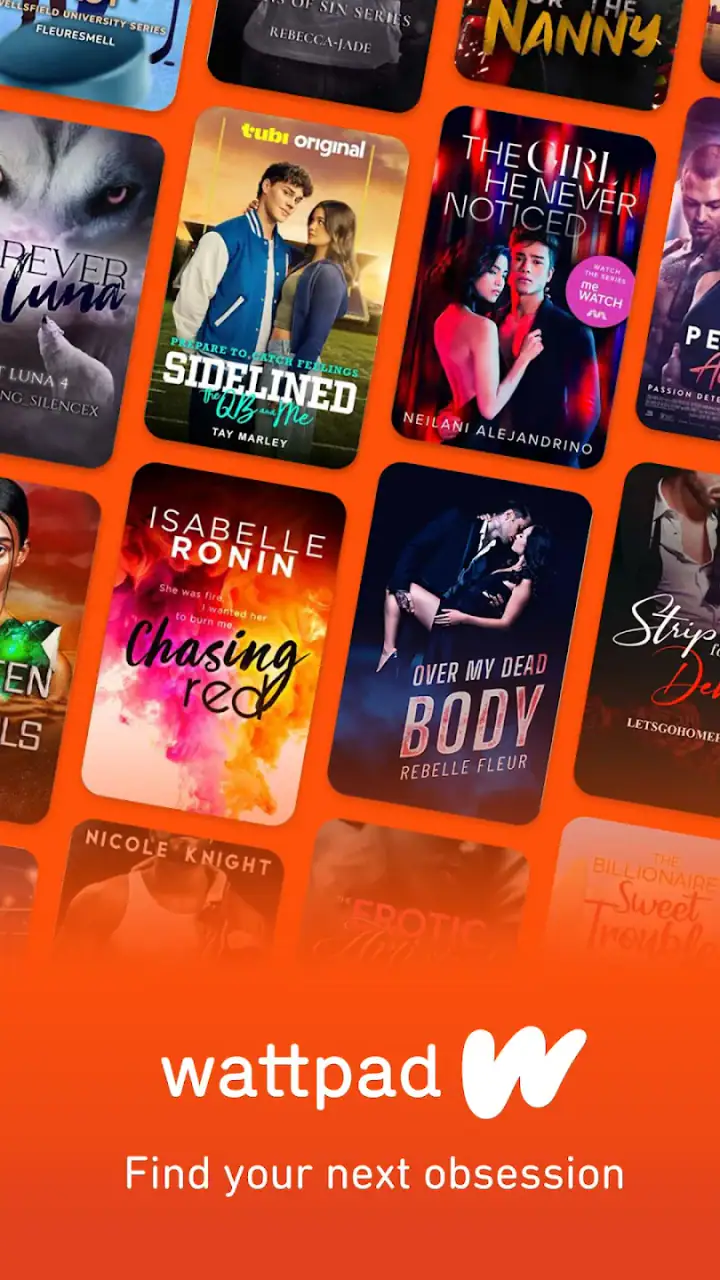
That trade-off should shape expectations. I would not choose Wattpad as my first option for a technical reference book, a formal textbook, or a carefully curated collection where every title has passed the same editorial process. I would choose it when I want variety, emerging writers, serialized fiction, and the possibility of discovering something outside the usual publishing pipeline.
Setting up boundaries before handing over the device
The first setup decision is not about reading preferences; it is about identity. If one person writes on the account while another only reads, the profile becomes difficult to interpret. A shared device can still work, but I would establish who owns the account, who may publish from it, and whether other household members are only browsing.
For younger users, I would also explain that Wattpad carries a Teen content rating. That is a useful starting point, but it is not a substitute for an adult conversation about what a particular reader is ready to encounter. Community-written stories can vary in tone, maturity, language, and subject matter, so I would not assume that a broad age label removes the need for supervision or occasional check-ins.
My practical approach would be to let a young reader show a parent the kinds of stories they are following, especially during the first few sessions. That feels more effective than silently inspecting every choice, because it teaches the reader to recognize uncomfortable material and discuss it. It also respects the fact that Wattpad is not merely a passive library; comments, author interaction, and public writing can all become part of the experience.
Another boundary concerns notifications and attention. A shared tablet used for homework, work, or sleep should not be treated as a dedicated Wattpad device. I would agree on when reading is welcome and when the device returns to its primary household purpose. The app is easy to dip into, which is convenient, but that same convenience can turn a short reading break into a much longer browsing session.
Managing discovery without losing control of the reading list
Wattpad’s enormous range is both its strength and its biggest source of friction. I do not expect the first recommendations I see to perfectly represent my taste. Instead, I treat the early sessions as a sorting process: open promising stories, read enough to judge the voice and pacing, and stop quickly when the fit is wrong.
A useful habit is to separate “maybe later” discoveries from stories I genuinely intend to follow. If I save everything that looks interesting, the reading list becomes a storage box rather than a useful queue. On a shared device, this matters even more because another person’s experiments can make the list look crowded and obscure the stories that someone actually wants to continue.
I also pay attention to the difference between an appealing premise and an enjoyable reading experience. A dramatic description may not tell me whether the writing style, chapter length, or update rhythm suits me. Since Wattpad contains many independently created works, I prefer to sample before committing. This small habit saves time and gives young readers a practical way to evaluate content rather than following every eye-catching title.
For writers, discovery requires a different kind of patience. Publishing a chapter is not the same as finishing a book, and reader reactions may be uneven. I would advise a new writer to keep a private copy of drafts elsewhere and to decide in advance how much feedback they want to absorb. The platform can make writing feel motivating, but public response should not become the only measure of whether a story is worth continuing.
Writing on Wattpad: useful, social, and not entirely private
The writing side is what separates Wattpad from most reading-focused alternatives. I can move from consuming stories to building one, which makes the app attractive to aspiring writers who want a direct publishing environment. It is especially suited to serialized work because the act of releasing sections can create a steady rhythm and invite reactions as the story develops.
That immediacy has a cost. I would be careful about editing a story impulsively after every comment or changing its direction simply because one reader asks for a different outcome. Feedback can reveal confusing scenes or pacing problems, but a writer still needs a plan. My preferred workflow is to draft several chapters privately, review the overall direction, and only then publish portions for readers.
On a household device, writing also needs a clear ownership rule. A child, parent, or sibling should not publish under someone else’s profile by accident. Before tapping a publish control, I would check the account name and the intended audience. That extra second is worthwhile because writing activity represents the person behind the profile, not merely the device currently in their hands.
Wattpad is also not my replacement for a full writing application. For serious editing, long manuscripts, research notes, or version control, I would rather use a dedicated tool and bring polished sections to Wattpad afterward. The app is strongest as a place to share and follow stories, not as the only workspace for a complex writing project.
Accounts, coordination, and the limits of a shared profile
When several people use the same tablet, coordination is more important than technical cleverness. I would keep a short household agreement: whose account is active, whether comments may be posted, and when the device is available. This avoids awkward situations where one person’s public interaction appears under another person’s identity.
I would also avoid assuming that a shared profile can represent a family’s collective taste. A romance reader, a fantasy reader, and a young writer may all enjoy Wattpad for different reasons, but their combined activity will make recommendations less useful. Separate accounts are the cleaner arrangement when multiple people use the app regularly. If that is not practical, each person should at least maintain clearly named reading lists and avoid treating the home feed as a neutral household catalog.
There is a social etiquette issue too. Comments can be part of the fun, but they are still public-facing interactions connected to a story community. I would encourage younger users to pause before sharing personal details, responding to strangers, or moving conversations elsewhere. The right lesson is not “never participate”; it is “participate with the same care used in any online community.”
For parents, coordination works better when it is visible and calm. Asking what a child is reading, why they like it, and whether anything felt uncomfortable creates more trust than treating every story as suspicious. For adult roommates, the concern is usually simpler: do not overwrite another person’s profile activity, and do not publish or comment while pretending to be them.
Age, trust, and choosing the right reader
The Teen rating makes Wattpad a reasonable option for older young readers and adults who understand that community fiction can cover many subjects. It is not the app I would hand to a small child without an adult nearby. The issue is not only vocabulary or genre; it is also the open-ended nature of user-created writing and interaction.
I would recommend a gradual introduction for a younger teenager. Start by choosing a few stories together, talk about the difference between fiction and personal advice, and explain that popularity does not guarantee quality or suitability. If the reader wants to write, discuss what information should remain private and why a public audience can respond in unexpected ways.
Trust should grow from demonstrated judgment rather than from assuming that a rating answers every question. A responsible reader can learn to leave a story that feels wrong, question sensational claims, and avoid sharing identifying details. An adult who checks in regularly can help build those habits without turning reading into an interrogation.
Adults should also recognize that Wattpad may not satisfy every reading goal. Someone seeking professionally edited novels, offline ownership of a carefully selected collection, or a quiet experience without community activity may prefer a traditional ebook service or a library app. Someone who wants to write privately may be happier in a notes or manuscript tool. Wattpad is a better fit when discovery and participation are part of the appeal.
Free access, optional spending, and everyday value
The app is free, which makes trying it low-risk for a household. There are in-app purchases ranging from under a dollar to just under ninety dollars per item, so I would explain that free access and optional spending are separate decisions. Before allowing a child to use a shared device, I would make sure everyone understands who, if anyone, may approve purchases.
I would not begin by spending money. First, I would test whether the reading experience, available stories, and community style suit the household. If the app becomes a regular part of someone’s routine, the family can then decide whether any optional purchase is worthwhile. This approach keeps the decision based on actual use rather than curiosity triggered by a locked or promoted item.
The current Android version is 11.24.0, and the minimum Android requirement is version 7.0. That makes it accessible on many older Android devices, although the practical experience will still depend on the device’s screen, storage, and general condition. On a shared tablet, I would keep the app updated when convenient and make sure the device itself remains comfortable for extended reading.
Small habits that make Wattpad easier to live with
My first tip is to read by commitment, not by impulse. Pick one or two stories to follow, sample new ones separately, and remove abandoned choices from the active routine. This keeps the app from becoming an endless stream of unfinished openings.
My second tip is for writers: separate drafting from publishing. I would write a scene, let it rest, and review it as a reader before making it public. That reduces the temptation to use immediate comments as an editing plan and helps preserve a consistent voice across chapters.
My third tip is for shared households: check the active identity before reading, commenting, or publishing. This is especially important when a parent and teenager use the same tablet. A clear account routine prevents accidental public activity and keeps recommendations from becoming a muddle.
My fourth tip is to use conversation as part of content guidance. Instead of asking only whether a story is “allowed,” ask what the reader likes about it, whether the characters behave in healthy ways, and whether the story’s themes feel manageable. That turns Wattpad into an opportunity to build media judgment rather than merely restrict access.
My household verdict
I recommend Wattpad for households that want a flexible mix of reading and creative writing and are willing to manage account boundaries themselves. Its free entry point, huge community, and direct path from reader to writer make it more engaging than a conventional reader for people who enjoy discovering developing voices. The app’s 3.9 average rating also reflects a realistic middle ground: many readers find a lot to enjoy, while others may be frustrated by uneven quality, busy discovery, or the social nature of the platform.
I would skip it for a young child using an unsupervised shared device, for anyone who wants only professionally edited books, and for writers who need a private, feature-heavy manuscript environment. I would also avoid one household-wide profile if several people plan to use Wattpad regularly, because the loss of personal context quickly undermines recommendations and identity.
For me, the best way to use it is deliberate rather than automatic: separate accounts where possible, clear expectations about public interaction, thoughtful sampling of stories, and regular conversations about age and trust. With those habits, Wattpad becomes a lively reading corner and a useful first publishing space. Without them, the same openness that makes it interesting can make a shared device confusing. That balance is the real decision point, and it is why I would recommend the app selectively rather than universally.
FAQs for Wattpad - Read & Write Stories
What is Wattpad and how does it work?
Wattpad is a popular storytelling platform where users can read and write stories across various genres. It allows writers to publish their work and engage with a community of readers. Users can browse stories, follow authors, and even participate in writing contests. The app is available on both Android and iOS, offering a vast library of free content with premium options for an ad-free experience.
Is Wattpad free to use?
Yes, Wattpad is free to download and use. It offers a wide range of stories that users can read for free. However, there are in-app purchases and a premium subscription that provides additional features such as an ad-free experience, offline reading, and early access to new chapters. This allows users to support their favorite authors directly.
Can I write and publish my own stories on Wattpad?
Absolutely! Wattpad encourages aspiring writers to publish their own stories. The platform provides easy-to-use tools for writing and editing. Once published, stories can be shared with the Wattpad community, where readers can comment and vote. It's a great way for writers to gain exposure and receive feedback on their work.
How does Wattpad protect my privacy and content?
Wattpad has a privacy policy in place to protect user data. Users have control over the information they share and can adjust privacy settings in their profile. Regarding content ownership, writers retain the rights to their stories. Wattpad also offers guidance on how to safeguard your work, which is important for authors concerned about intellectual property.
What types of stories can I find on Wattpad?
Wattpad hosts a diverse range of genres, including romance, science fiction, fantasy, mystery, and more. Whether you enjoy fan fiction, poetry, or thrillers, there's something for everyone. The platform regularly features trending stories and recommended reads, making it easy for users to discover new and exciting content tailored to their interests.
Pros
- Vast library of user-generated stories.
- Interactive and engaging community features.
- Offline reading available for convenience.
- Customizable reading settings for comfort.
- Regular updates with fresh content.
Cons
- In-app ads can be disruptive at times.
- Some stories lack professional editing.
- Limited features in free version.
- Occasional app crashes reported.
- Requires internet for full functionality.


